
Assessment vs. Intervention: A Key Strategy for Passing the ASWB Exam
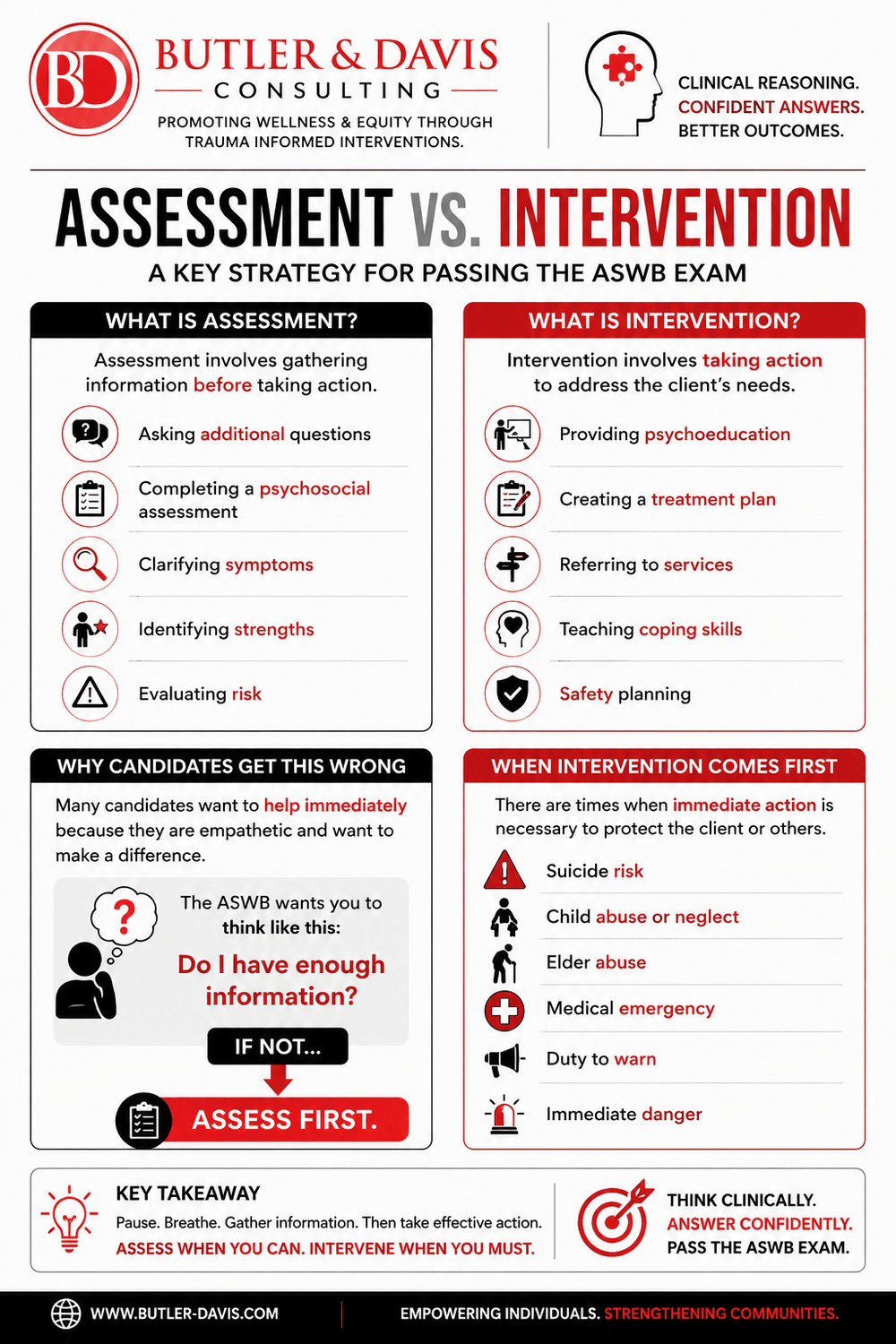
One of the most common mistakes ASWB candidates make is choosing an intervention before completing an appropriate assessment. The exam is designed to measure your clinical reasoning—not just your knowledge. Before selecting an answer, ask yourself:
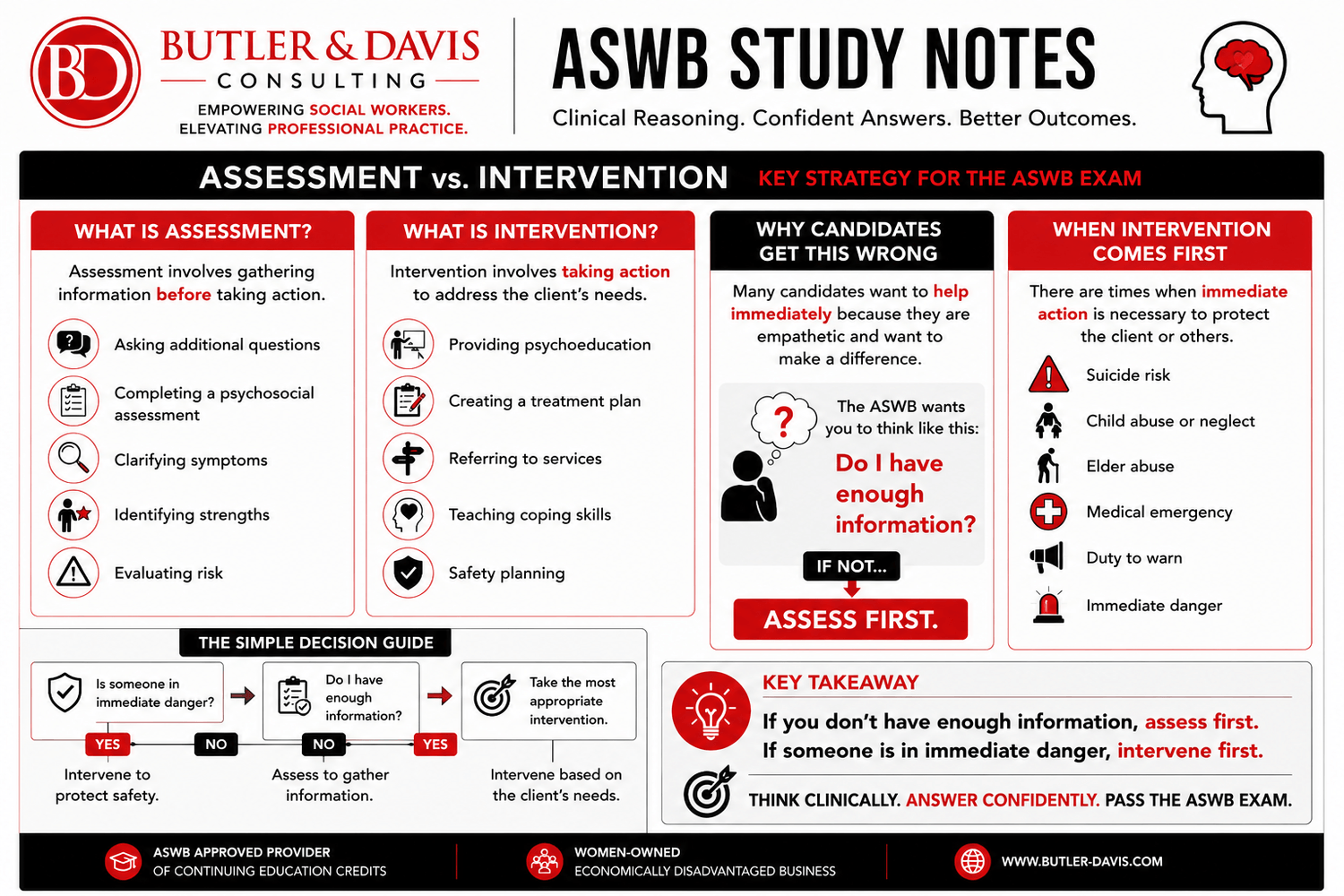
Do I have enough information to act?
If the answer is no, the best next step is usually to assess first.
Assessment Comes Before Intervention
Assessment is the process of gathering information to understand the client's situation before taking action. This may include asking additional questions, completing a psychosocial assessment, clarifying symptoms, identifying strengths, and evaluating risk. Once you have enough information, you can choose the most appropriate intervention, such as providing psychoeducation, creating a treatment plan, teaching coping skills, making referrals, or developing a safety plan.
Know the Exceptions
There are times when intervention comes before additional assessment. If a client is at immediate risk of harm due to suicidal intent, child abuse, elder abuse, a medical emergency, duty to warn, or another imminent safety concern, protecting safety becomes the priority. Remember this simple rule:
If you don't have enough information, assess first. If someone is in immediate danger, intervene first.
Is your organization trauma informed?
Take this free but brief organizational assessment to help you uncover the policies, practices and behaviors that need to be improved upon.

Latest from our blog

Policy Pages
Get in touch


Copyright © 2025